Source Modern Standing Seasoning Jar Organizer for Kitchen, Pantry, and Countertop
Find a modern standing seasoning jar organizer for 30 available items with capacities from 0 to 120ml. Buyers can compare glass and stainless steel options, various cap types, and MOQs ranging from 100 to 10,000 pieces for kitchen spice storage needs.
Key considerations
Products List




Comprehensive Sourcing Guide
Strategic Sourcing Guide for Modern Standing Seasoning Jar Organizers
Understanding Product Architecture and Technical Specifications
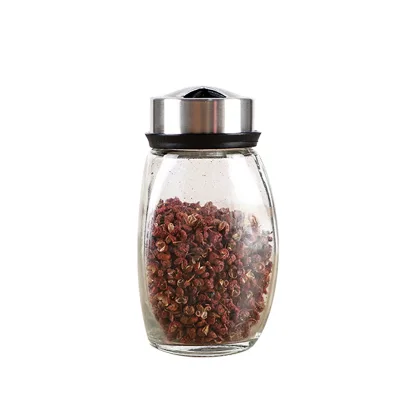
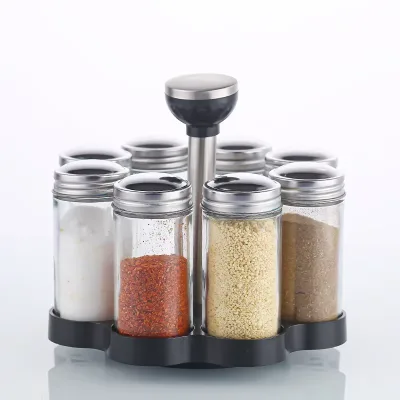
When sourcing a modern standing seasoning jar organizer, buyers must first distinguish between the storage vessel itself and the structural framework designed to hold it. The market presents a hybrid category where glass jars with grinding mechanisms are often integrated into stainless steel or aluminum organizers. Based on observed product attributes, the core vessel typically features a glass collar material with a capacity ranging from 100ml to 120ml. The glass is often transparent or clear, allowing for immediate visual identification of spice levels. The cap mechanism is a critical technical differentiator; observed data indicates the presence of both grinding caps and screw caps. A grinding cap suggests an integrated milling function for fresh spices, while a screw cap implies a simple pour or dip application.
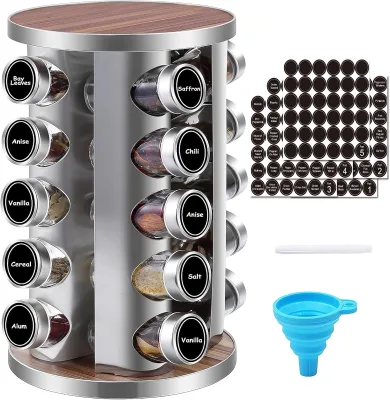
The structural organizer component, often described as a rack or cabinet organizer, utilizes stainless steel as the primary material. This choice is driven by the need for durability in kitchen environments and resistance to corrosion from salt and moisture. The manufacturing process for these metal frames frequently involves stamping, cutting, and welding, with surface treatments such as powder coating, chrome plating, or aluminum anodization to enhance aesthetic appeal and longevity. The "modern" designation in the keyword often correlates with a "round" or "common" shape for the jars and a "flexible" functional design for the rack, allowing for vertical stacking or modular expansion. Some configurations feature a specific number of layers, such as a three-layer design, to maximize vertical storage space in kitchen cabinets or on countertops.
Dimensional precision is paramount for these systems. Observed specifications list a dimensional tolerance of less than ±1cm, which is essential for ensuring that jars fit securely within the rack slots without wobbling. Weight tolerance is similarly critical, with observed data indicating a variance of less than ±5%. The single package size for these units can be substantial, with some listings noting dimensions of 40x20x15 cm, which impacts shipping logistics and storage requirements. The thickness of the metal components is often specified at 0.3mm, a balance between structural rigidity and lightweight portability. Buyers should verify that the "single gross weight" aligns with the expected load capacity of the shelf or counter where the unit will be placed.
Compliance, Certification, and Material Safety
In the food and beverage sector, material safety is non-negotiable. Sourcing guides must prioritize products that have undergone rigorous testing to ensure they do not leach harmful substances into food items. The supplied product data explicitly mentions a "food grade test" certification, which is a primary indicator of compliance for the glass and plastic components. For the metal frames, certifications such as BSCI, SGS, and RoHS are observed. BSCI (Business Social Compliance Initiative) indicates adherence to ethical labor standards, while SGS and RoHS (Restriction of Hazardous Substances) verify that the materials are free from specific hazardous chemicals and meet international safety standards.
Buyers must verify that the "glass" used for the jars is tempered or treated to withstand thermal shock, especially if the jars are intended for hot spices or frequent washing. The "plastic" material used for the caps must be food-grade, as indicated by the "food grade test" observation. The "stainless steel" used for the organizer frame should be verified for its grade (e.g., 304 or 316) to ensure it does not rust or corrode in humid kitchen environments. The "powder coated" or "chrome" surface treatments must be non-toxic and resistant to chipping, which could introduce metal fragments into the kitchen environment.
It is important to note that while specific certifications like BSCI and SGS are listed in the product attributes, buyers should not assume every unit in a supplier's catalog carries these specific marks without verification. The presence of "Eco-friendly" features suggests that the manufacturing process may adhere to environmental standards, but this should be cross-referenced with the supplier's actual documentation. The "customization" option available for these products often extends to branding and labeling, but any custom inks or adhesives used must also comply with food contact regulations.
Cost Drivers and Economic Factors
The pricing for modern standing seasoning jar organizers is influenced by a complex interplay of material costs, manufacturing complexity, and order volume. The observed price range of $0.19 to $97.53 USD reflects the vast difference between a single jar component and a fully assembled, multi-layer rack system. The lower end of the spectrum likely represents individual glass jars or basic screw-cap containers, while the higher end encompasses the stainless steel frames, grinding mechanisms, and packaging.
Minimum Order Quantity (MOQ) is a significant economic driver. The data shows a wide range, from 100 pieces to 10,000 pieces. A lower MOQ of 100 pieces may be suitable for small businesses or startups testing the market, but it often comes with a higher unit cost. Conversely, an MOQ of 10,000 pieces is typical for large-scale retail distribution and allows for economies of scale that drastically reduce the per-unit price. The "stocked" attribute suggests that some suppliers may offer immediate availability for smaller quantities, potentially at a premium compared to custom-manufactured runs.
Material costs are another primary factor. Stainless steel prices fluctuate based on global commodity markets, directly affecting the cost of the organizer frame. Similarly, the cost of high-quality glass and food-grade plastics impacts the price of the jars. The "surface treatment" processes, such as chrome plating or anodization, add labor and chemical costs. The "single package size" and "gross weight" also influence logistics costs; larger, heavier units incur higher shipping fees, which can be a hidden cost driver for international buyers. Buyers should calculate the total landed cost, including freight, duties, and insurance, rather than focusing solely on the FOB price.
Typical Applications and Usage Scenarios
The versatility of modern standing seasoning jar organizers makes them suitable for a wide array of applications. The primary use case is in the kitchen, specifically for organizing spices, salt, and pepper. The "kitchen spice salt grinder" and "kitchen cabinet organizer" labels highlight their dual function as both storage and preparation tools. The "three-layer" design is particularly effective for maximizing space in deep cabinets or on narrow countertops, allowing for the separation of different spice categories.
Beyond the kitchen, the "application" data lists bathroom, bedroom, and home usage. In a bathroom, these organizers can hold cotton balls, bath salts, or small toiletries. In a bedroom, they might be used for organizing sewing kits or small craft supplies. The "sundries, spice" usage category further broadens their utility to general household organization. The "modern" and "flexible" design attributes make them aesthetically pleasing enough to be displayed openly on a dining table or kitchen island, rather than hidden in a cupboard.
The "grinding cap" feature specifically targets the culinary application of fresh spices, enhancing the flavor profile of dishes. This makes the product particularly valuable for professional kitchens, restaurants, and home cooks who prioritize fresh ingredients. The "cover with hole" style suggests a design that allows for easy access while preventing spillage, a crucial feature for active cooking environments. The "stocked" availability ensures that these items can be quickly deployed in commercial settings where inventory turnover is high.
Supplier Evaluation and Selection Criteria
Selecting the right supplier requires a thorough evaluation of their capabilities, consistency, and reliability. Buyers should prioritize suppliers who can demonstrate the "food grade test" certification and other relevant standards like BSCI and SGS. The "place of origin" being Jiangsu, China, indicates a manufacturing hub with established supply chains for glass and metal products, but buyers must verify the specific factory's capacity and quality control processes.
The "customization" availability is a key differentiator. Suppliers that offer branding, color variations (such as "silver or other colors" for caps), and packaging options provide greater value to buyers looking to differentiate their products. However, customization often requires higher MOQs and longer lead times. Buyers should assess the supplier's ability to handle "sample" orders, as the data indicates that samples may be free with orders, which is a positive indicator of supplier confidence.
The "technical" capabilities of the supplier, including "stamping, cutting, welding, printing," should be verified to ensure they can meet the specific dimensional tolerances (<±1cm) and weight tolerances (<±5%) required. A supplier with in-house quality control for "surface treatment" processes like powder coating and chrome plating will likely produce more consistent results. Buyers should also consider the "lead time" and "MOQ" flexibility. A supplier offering an MOQ of 100 pieces may be more suitable for smaller orders, while one requiring 10,000 pieces is better for bulk procurement.
Quality Control and Long-Term Procurement Considerations
Quality control is essential for maintaining the integrity of the product throughout its lifecycle. Buyers should implement a rigorous inspection process that checks for dimensional accuracy, surface finish quality, and material strength. The "dimensional tolerance" of <±1cm and "weight tolerance" of <±5% must be strictly enforced during production and pre-shipment inspections. Any deviation in these metrics can lead to fitment issues where jars do not sit securely in the rack, causing instability and potential breakage.
Long-term procurement considerations include the durability of the "stainless steel" frame and the "glass" jars. The "powder coated" or "chrome" finish must be tested for adhesion and resistance to scratching and corrosion. The "grinding cap" mechanism should be tested for smooth operation and longevity, as mechanical failure can render the product unusable. Buyers should also consider the "eco-friendly" aspect, ensuring that the packaging and materials align with sustainability goals, which is increasingly important for modern consumers.
The "single package size" and "gross weight" impact long-term logistics and storage. Buyers should plan for efficient warehousing to minimize damage during storage and transport. The "stocked" status of some items suggests that suppliers may have buffer inventory, but buyers should confirm this to avoid stockouts during peak demand periods. Finally, the "customization" options should be reviewed for their long-term viability, ensuring that the branding and design elements remain relevant and do not require frequent updates.
Comparative Analysis of Product Attributes
To facilitate decision-making, the following table summarizes the key attributes observed in the product data, highlighting the variations and commonalities that buyers should consider.
| Attribute Category | Observed Variations | Common Standard |
|---|---|---|
| Material | Glass, Stainless Steel, Plastic | Food Grade, Durable |
| Capacity | 100ml, 120ml, 0-100ml | 100ml-120ml Range |
| Cap Type | Grinding Cap, Screw Cap | Secure Closure |
| Shape | Round, Common | Modern Aesthetic |
| Surface Treatment | Powder Coated, Chrome, Anodized | Corrosion Resistant |
| Certification | Food Grade Test, BSCI, SGS, RoHS | Safety Compliance |
| MOQ | 100pcs, 10,000pcs | Flexible Order Sizes |
| Tolerance | <±1cm (Dimensional), <±5% (Weight) | Precision Fit |
This comparison underscores the need for buyers to specify their exact requirements regarding capacity, cap type, and surface finish to ensure the final product meets their operational needs. The variability in MOQ and certification levels also highlights the importance of clear communication with suppliers to align expectations and deliverables. By carefully evaluating these attributes, buyers can secure a high-quality, compliant, and cost-effective modern standing seasoning jar organizer that enhances their kitchen organization and operational efficiency.
FAQs
What certifications do modern standing seasoning jar organizers have?
These products typically hold food grade test certification for the glass and plastic components. Metal frames often carry BSCI, SGS, and RoHS marks to ensure ethical labor and safety from hazardous substances.
How is the capacity of these spice jars defined?
The capacity usually ranges from 100ml to 120ml depending on the specific model. This volume is suitable for storing common kitchen spices while maintaining a compact footprint for cabinet organization.
Which materials are used for the jar and the rack?
The jars feature glass collars with plastic caps, while the organizer rack is made of stainless steel. The metal frame often undergoes powder coating or chrome plating for durability and aesthetic appeal.
Can buyers customize the product design and branding?
Customization is available for branding, cap colors, and packaging options. Buyers should note that custom orders may require higher minimum order quantities and longer lead times compared to stocked items.
What is the typical minimum order quantity for these organizers?
Minimum order quantities vary significantly, ranging from 100 pieces to 10,000 pieces. Lower MOQs suit small businesses, while higher volumes are required for large-scale retail distribution to achieve better pricing.
How precise are the dimensions of the storage units?
Dimensional tolerance is maintained at less than plus or minus 1cm to ensure a secure fit. Weight tolerance is similarly controlled at less than plus or minus 5% to guarantee stability on shelves.